
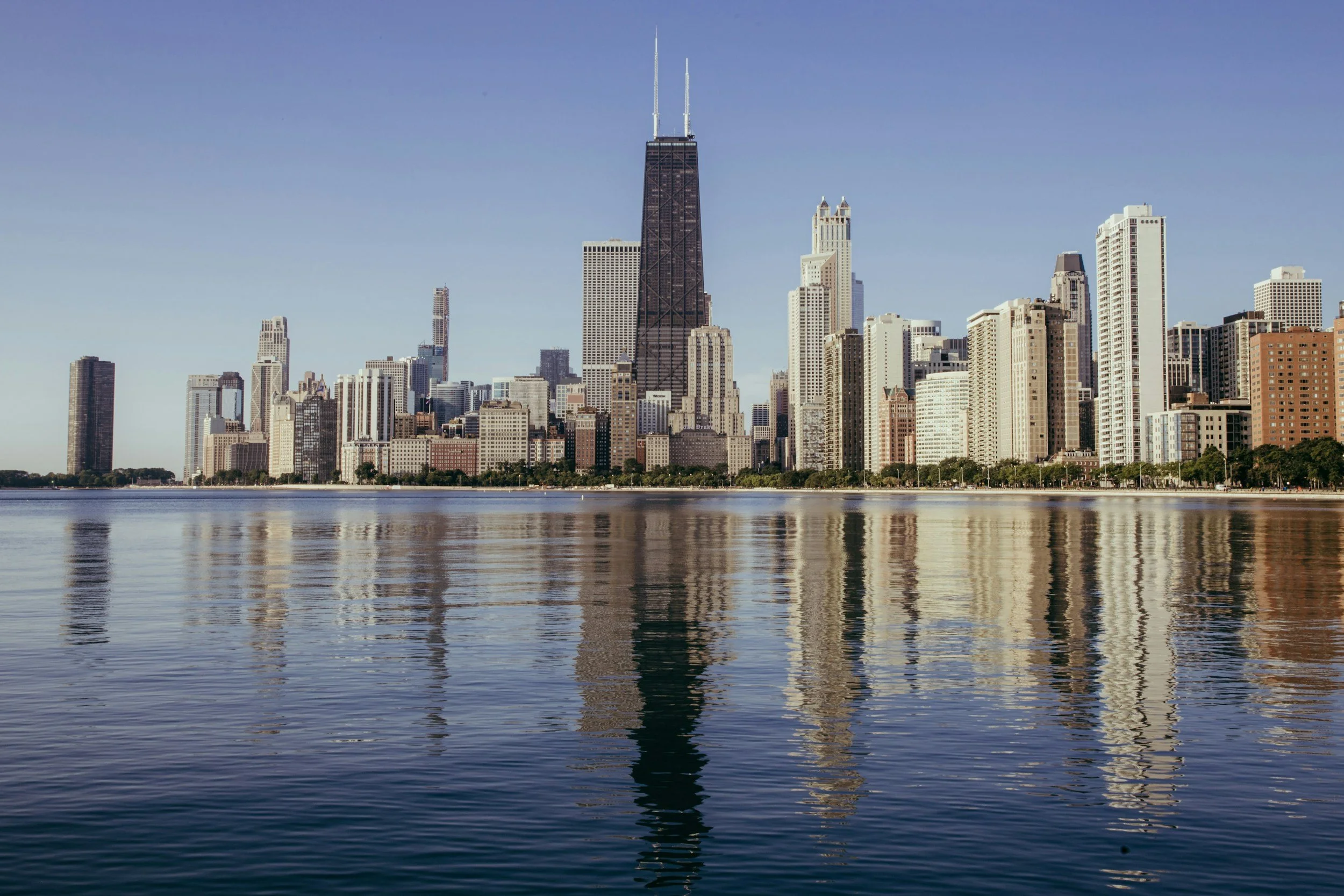
When I was a little girl living in the Chicago suburbs, I have a very distinct memory of something we did every couple of weeks. My mom would load my siblings and me into the station wagon, drive downtown to meet my dad at his office, park in the office parking lot, and go retrieve Dad from his office (where he was sitting, playing Sopwith Camel and drinking Mountain Dew waiting for us). Then we'd all ride the 'L' to go get pizza.
Without fail, on the Brown Line, women in their 1990s business suits would ride out their commutes, complete with full nylons and tennis shoes. I remember the tennis shoes distinctly because, of course, these women weren't making their commutes harder than necessary by walking blocks in heels. Those were left in the office or tucked into their demure briefcases or purses.
I remember thinking, "This is the pinnacle of being an adult woman and exactly what I want to be when I grow up."
Looking back, I realize I had absolutely no idea what these women actually did for a living. I couldn't have told you what industry they worked in, what their job titles were, or whether they enjoyed their work. I knew just as little about what my dad did all day, beyond the fact that his office contained a computer game and a seemingly endless supply of Mountain Dew.
But I knew what their lives looked like to me. These women were important. They had jobs. They worked outside the home. They wore glamorous outfits and had big hair. They carried briefcases full of important paperwork, some of which apparently needed to be taken home with them. They looked like women who had somewhere to be and things to do.
Compare that with my mom, my friends' moms, and the other adult women I knew from church. Almost all of them were stay-at-home moms. They wore frumpy skirts and jean jumpers. They made homemade dinners, vacuumed and dusted, and many of them homeschooled their children. Their days were organized around the needs of their families and homes.
I didn't have the language for it then, but looking back, I recognize how little respect these women received in our community. Their work was expected, but rarely celebrated. Their contributions were important to the people who depended on them, but they weren't necessarily treated as important in the broader world around them.
I've said for years that I've known since childhood that I didn't want to be a mom. And while I know that my husband and I have made the right decision for our lives by not having children, I find myself wondering how much of my childhood distaste for motherhood was shaped by this distinction.
I wanted to be recognized. I wanted to be important to someone beyond my children and husband. I wanted my life to have meaning that I chose, rather than meaning that was handed to me as part of the role I was expected to fill.
I wanted those things. I just wasn't supposed to want them.
The women on the Brown Line weren't necessarily women without families. They could have had husbands, wives, children, and homes waiting for them at the end of their commutes. I had no idea. What I understood, even as a child, was that they seemed to have something I didn't see modeled in the women around me: the ability to be more than one thing.
They could be mothers and professionals. They could have families and careers. They could be responsible for other people and still have something that belonged entirely to themselves. They seemed important in their own right.
I didn't know what they did for a living. I just knew I wanted the kind of life I imagined they had.
As I got older and tried to figure out “what I wanted to be when I grew up”, I still didn’t have any idea what that meant. I knew I wanted to go to college. I knew that’s what successful people did. I picked a college that I thought my parents would allow me to go to, but one that I got to feel like I had a choice - women could wear pants to class! And I struggled. I didn’t have a plan outside of “I want to be important.” I didn't lack ambition. I just didn't know what I wanted to do with it.
I was still navigating the soup I had been raised in. I could be important or smart, but I couldn't rub it in people's faces. I could have a career, but it was expected to take a backseat to the real work of being a wife and mother. In fact, a career was supposed to be the first thing I let go of once I found a good man and "settled down." It was a backup plan, something to fall back on if something happened to the aforementioned husband.
I was supposed to be capable, but not too independent. Ambitious, but not at the expense of my family. Educated, but not so invested in my education or career that I forgot what my real priorities were supposed to be.
There was an unspoken understanding that my ambitions were acceptable as long as they remained subordinate to the life I was expected to build with someone else.
In hindsight, my ambition wasn't for a particular career. It was to have an identity; something I perceived the adult women in my life as lacking. I had to figure it out along the way, largely by myself, because I certainly wasn't going to get advice and guidance from the very people who hadn't been given the tools to help themselves, much less me.
And this is where the bigger picture of the cycle becomes clear. Girls look to adult women to understand what adulthood can look like. Those women model the options they were taught were available to them. Girls who want something different have to figure out what that difference looks like without much guidance. Eventually, those girls become adults who have to decide whether to reproduce the same limitations or create something different.
This is why I am so committed to mentorship.
I didn't have the support of older women in my life who could show me what was possible. I had the women on the Brown Line, women I didn't know and wouldn't have known how to approach, much less ask for advice. I had glimpses of a life I wanted but very few people who could help me figure out how to build it.
Now, mentorship is woven into so much of what I do. As a mental health clinician, I help people recognize that they are capable of healing, changing, and building lives that look different from the ones they've known. Through my mentoring with Women and Wisdom and my work speaking at universities, I get to connect with young women who are still figuring out who they want to become.
There is an old saying about being the change you want to see in the world. The change I want to see is choice.
I want women to be equally supported in whatever goals and lives they choose for themselves. I want the young women in my life to have encouragement, guidance, and connections with other women who have built the kinds of lives they might want for themselves. I want them to know that there are doors available to them, even if they haven't figured out how to open them yet.
I don't want to tell them what kind of women to become. I want them to know they have the freedom to decide.